8 Tips for Choosing Your RC Transmitter
Find the best transmitters for RC cars in this post, and run your races like a real pro!
By Elite Radio Control teamUpdated 5 min read
Part of the guide: RC electronics: batteries, motors and ESCs
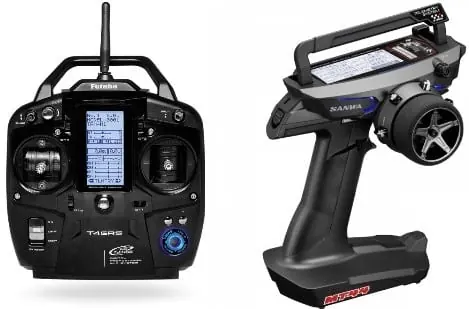
8 Simple Tips for Choosing Your RC Transmitter
Choosing an RC transmitter for your RC car can easily take longer than you expect, because there are several things to weigh up to get it right.
That’s why we put this guide together, so you can do it quickly and easily, without too many hiccups along the way.
You can choose one of the transmitters we’ve picked out for you; when you select one, you’ll be taken to Amazon, where you can check every detail of the radio.
How does an RC car transmitter work?
An RC car is controlled with a transmitter that sends the driver’s commands to the RC car’s receiver, which passes the information on to the steering and other components.
The radio technology RC cars use these days is the 2.4 GHz band, which makes it possible to drive dozens of cars at the same time without having to change frequencies manually on each one.
Once the transmitter and your RC car’s receiver are bound, other radio gear nearby won’t interfere with them. Radio transmitters only work with receivers from the same manufacturer, so that’s an important point to keep in mind.
Tips on choosing a radio
When it’s time to choose a new RC transmitter, it’s a good idea to look for gear from a well-known manufacturer rather than cheaper gear you can’t find much information about.
That way you make sure your radio will work without interference. Some recommended manufacturers include Sanwa, Futaba, Spektrum and Hitec.
Below are a few things to keep in mind when choosing your RC transmitter.
RC transmitter channels
An RC car normally needs two channels, one for steering (CH1) and one for throttle (CH2).
In most cases, though, radios have 3 or 4 channels.
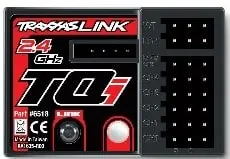
The extra channels can be used to control additional parts, such as a winch or lights, or on race cars they can power the lap-timing transponder.
What’s the range of an RC transmitter?
These days the range of an RC transmitter is very good, and can reach hundreds of yards in open spaces.
Keep in mind, though, that indoors you can get interference from other devices that use the 2.4 GHz band, such as Wi-Fi access points.
That’s when you’ll notice why it matters to use high-quality gear.
The higher the quality, the less interference there is as the signal travels from the transmitter to the receiver.
What to consider in an RC car transmitter
These are some of the most important points to keep in mind when choosing the right radio for you. Pay close attention to them, because they’ll help you get the best transmitter for your RC car.
Stick radio or wheel-and-trigger?
There are far more wheel-and-trigger (pistol-grip) RC transmitters on the market than stick radios, and the brands offer a wide selection so you can pick the one that suits you best.
Stick radios are a bit less common, but Sanwa and Futaba make high-quality ones. They’re ideal for slower models with lots of functions, such as trucks, tanks, excavators and many others.
How many channels does your RC car need?
As we mentioned above, radios tend to have three channels. If your car has extra controllable parts, you’ll need additional channels to run them. It all depends on the kind of scale RC vehicle you have.
Do you need telemetry too?
More experienced drivers need accurate, real-time information about the car.
With telemetry, you can get readings on temperatures, motor RPM or battery voltage.
Keep in mind that telemetry sensors are sold separately.
RC transmitter model memory
If you have several cars, it’s important to save a model-specific setup in your RC transmitter’s memory.
To switch cars by selecting another model in the transmitter’s memory, you’ll need a separate receiver for each one.
That way you can use the same RC transmitter to drive two or more cars. The radio stores each setup and makes the right adjustments for the car you’re driving.
When you switch cars, just select the right model on the transmitter.
Installing the RC transmitter and receiver
When you install your radio gear, keep in mind that the receiver needs a power supply (it usually runs on 5–6 V; as always, check the manual to be sure).
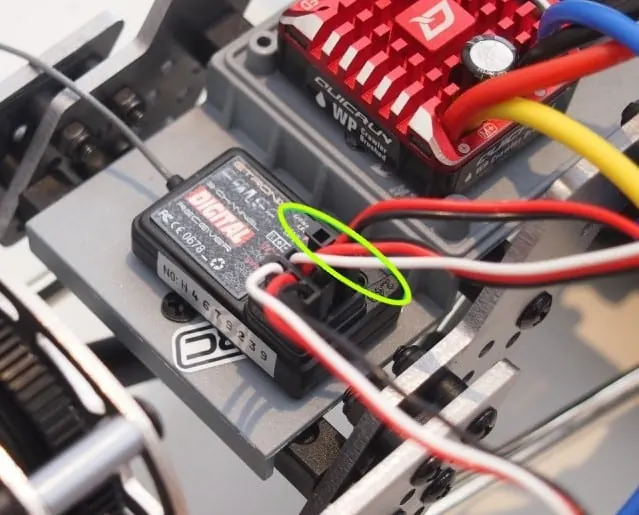
In most electric cars, the receiver gets its power from the BEC circuit built into the speed controller. The lead coming from the speed controller powers the receiver.
On nitro RC cars, the receiver needs a separate power supply plugged into the receiver’s power port (BAT). In this kind of car, the steering servo and the throttle servo get their power through the receiver.
Keep in mind that electric setups have only one power source for the receiver. So when you use an ESC whose BEC powers the receiver, you can’t add an external BEC without changing the car’s wiring.
If you want to use the newer HV (high-voltage) servos, make sure your receiver can handle 7.4 volts.
Binding the RC transmitter and receiver
The receiver must always be bound to the transmitter before use. You only need to do it once. You’ll find more detailed instructions in your radio’s manual.
Keep in mind that in some cases you may have to bind again because of interference or a power management error.
Otherwise it’s only needed when you move the receiver to another car or to a different memory slot on the radio.
Note: after replacing your radio gear or any of its components, you must recalibrate the ESC and check, and adjust if needed, the EPA (end point adjustment), travel and trim.
Used RC transmitters
You can get a second-hand radio; there are plenty out there. As we always say, in the RC world hobbyists are always selling off parts because they’ve bought a new model, or they’ve changed parts on their scale cars and no longer need them.
It’s much the same with RC transmitters, since a hobbyist may need more channels to control their RC car and want to buy a new transmitter, so their old gear is no longer any use to them.
When you buy a used RC transmitter, make sure everything works properly: transmission range, frequency, binding with receivers, and any interference between the radio and the car.
You’ll find used transmitters like these in Facebook groups for RC fans in your area, and at the clubs you hang out at.
Final thoughts on RC transmitters
We hope we’ve answered most of your questions about which RC transmitter is the best fit for you.
We want you to enjoy the hobby as much as we do, so if you have more questions or comments, feel free to leave them in the comments section below.
We invite you to keep exploring the rest of the content we have for you.
Related guides
RC cars
Brushless vs Brushed Electric RC Motors: Which Is Better?
Learn the difference between brushless and brushed electric motors in RC cars. Don't miss this complete guide!
5 min read
RC cars
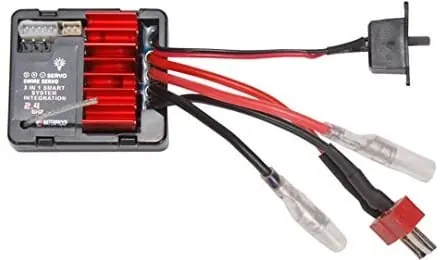
What Is an ESC: How It Works, How to Choose One and How to Install It
The ESC controls how much power reaches your RC car's motor. What it does, which specs to look at, what size you need and how to mount and connect it.
4 min read
RC cars
How Long Does It Take to Charge an RC Car Battery?
Find out how long it takes to charge your RC car's battery and get back in action in no time.
4 min read
RC aircraft
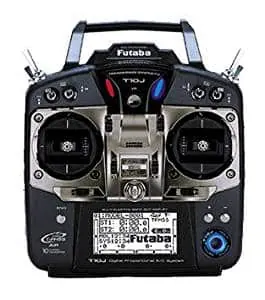
Futaba Radios
Here we take a look at the radio equipment company Futaba. We'll tell you about the company and its origins.
3 min read