RC Motorcycles: Types, How They Work and How to Choose Yours
On-road and motocross RC bikes, electric or gas, for kids and for hobbyists: how they stay balanced, what to check before you buy and how to take care of them.
By Elite Radio Control teamUpdated 3 min read
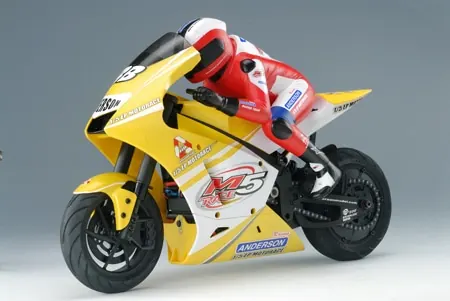
RC motorcycles are one of the most eye-catching corners of the RC hobby: they lean into corners like the real thing, slide on dirt and, in the case of motocross models, even jump. They’re also more demanding to drive than an RC car, because they have to stay balanced on two wheels. In this guide you’ll see what types there are, how they work and what to keep in mind when choosing yours.
Types of RC motorcycles
- On-road (sport) bikes. Replicas of racing motorcycles for pavement, with a fairing and a rider figure. They’re all about grip and precision in the corners. A classic in this category is the Kyosho Hang-On Racer.
- Motocross and enduro bikes (off-road). Long-travel suspension and knobby tires for dirt and jumps. The Losi Promoto-MX is a well-known example of a motocross RC bike with electronic stabilization.
- Toy bikes. Designed for kids, with low speeds, training wheels or stabilizers and popular characters, like the Paw Patrol motorcycle.
Electric or gas
The vast majority of today’s RC motorcycles are electric: they use a LiPo or NiMH battery, a motor (more and more often brushless) and an ESC. They’re quiet, easy to use and need almost no motor maintenance. Combustion RC bikes do exist, but they’re very rare and need the same care as a nitro or gas RC car.
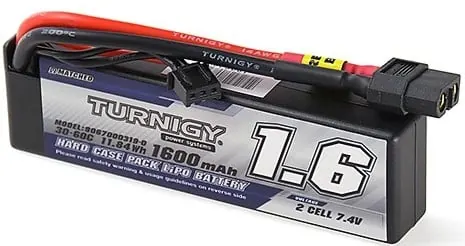
If your bike runs on a LiPo battery, learn how to charge and store it safely in our guide to RC LiPo batteries.
How it stays balanced
An RC motorcycle relies on the same things as a real one: the spinning wheels create a gyroscopic effect that stabilizes it, and the fork geometry tends to bring it upright. The trouble starts at low speed, when braking or when pulling away from a stop. To solve that, many models include:
- An electronic gyro, which corrects the steering automatically to keep the bike upright.
- A flywheel inside the rear wheel or the chassis.
- Training wheels or stabilizer legs on toy models.
The more advanced the stabilization system, the easier it is to learn and the fewer crashes you’ll have.
You can compare RC motocross bikes and on-road RC motorcycles on Amazon, as well as RC motorcycles for kids if you’re shopping for a gift.
What to check before you buy
- Use and terrain. Smooth pavement for an on-road bike; dirt, grass or a motocross track for an off-road one.
- Skill level. If you’re just starting out, choose a model with electronic stabilization and speed you can limit from the transmitter.
- Scale and size. Big bikes are more stable and soak up bumps better, but they need more room and cost more.
- Battery and run time. Check which battery it uses, how long it lasts and whether the battery and charger are included.
- Spare parts. Crashes are part of learning, so choose a brand whose parts are easy to find (levers, footpegs, forks, fairings).
- Recommended age, if it’s a gift for a child.
Basic maintenance
RC motorcycles take more hits than a car, so after every session it’s a good idea to:
- Clean off dust and dirt with a brush and compressed air, without getting the electronics wet.
- Check the screws, levers, footpegs and handlebars after every crash.
- Check the chain or drivetrain, and the chain tension if it has one.
- Inspect the suspension and look for oil leaks on the forks.
- Store the battery at storage voltage in a cool, safe place.
Many of these jobs are the same as on a car: you’ll find the full routine in how to clean an RC car.
Customize your bike
Just like with RC cars, you can give your motorcycle its own style: painted fairings, decals, tires in a different compound or a rider figure in your team colors. If you want to paint it, the techniques are the same as when you paint an RC body.
Would you rather start on four wheels? See which RC car to buy or check out our guide to RC cars for kids.
Frequently asked questions
How does an RC motorcycle stay upright?
The same way a real motorcycle does: through the gyroscopic effect of the spinning wheels and the steering geometry. Many RC bikes add an electronic gyro or a flywheel that corrects the steering to keep the bike stable, especially at low speed.
Is an RC motorcycle harder to drive than an RC car?
Yes, at first. The bike leans to turn and can easily fall over when braking or at low speed. Models with electronic stabilization make learning much easier.
Are there RC motorcycles for kids?
Yes. There are toy bikes with training wheels or a stabilizer and low speeds, designed for younger kids. Always check the age recommended by the manufacturer.
Related guides
RC cars
RC LiPo Batteries: How to Choose, Charge and Care for Them
What the cell count (S), mAh and C rating on a LiPo battery mean, how to choose one for your RC car, plane or boat, and how to charge it, store it and tell when it's damaged.
4 min read
RC Cars for Kids
RC cars for toddlers, girls and boys, plus character models like Toy Story, PAW Patrol and Mario Kart.
2 min read
RC cars
RC Monster Trucks: What They Are, Types and How to Choose One
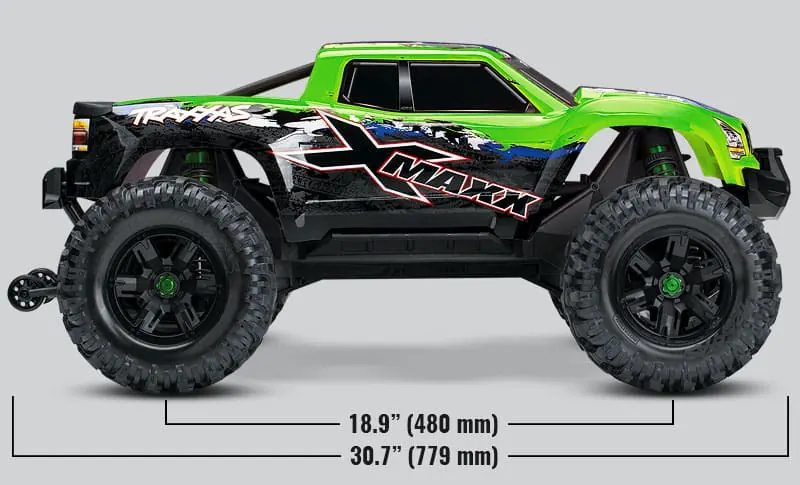
RC monster trucks are the most versatile RC vehicles: giant tires, long-travel suspension and big jumps. Types, scales, electric vs nitro and well-known models.
3 min read
RC cars
Nitro and Gas RC Cars: How They Work and How to Choose Yours
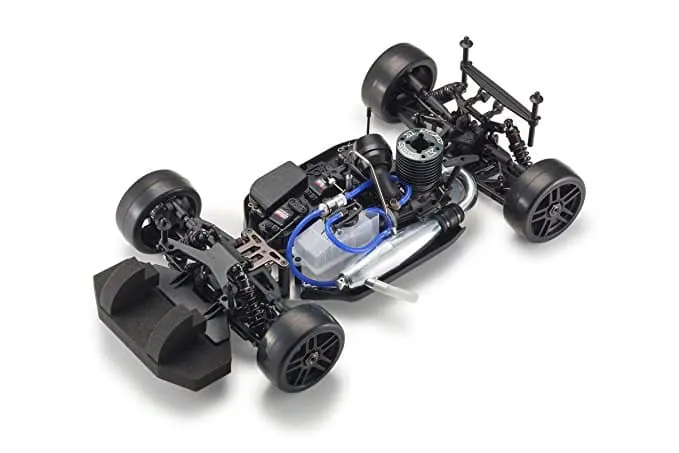
The difference between nitro and gas, common scales, what you need to start the engine, how to maintain them and what to consider before buying your fuel-powered RC car.
5 min read