Nitro and Gas RC Cars: How They Work and How to Choose Yours
The difference between nitro and gas, common scales, what you need to start the engine, how to maintain them and what to consider before buying your fuel-powered RC car.
By Elite Radio Control teamUpdated 5 min read
Part of the guide: RC cars
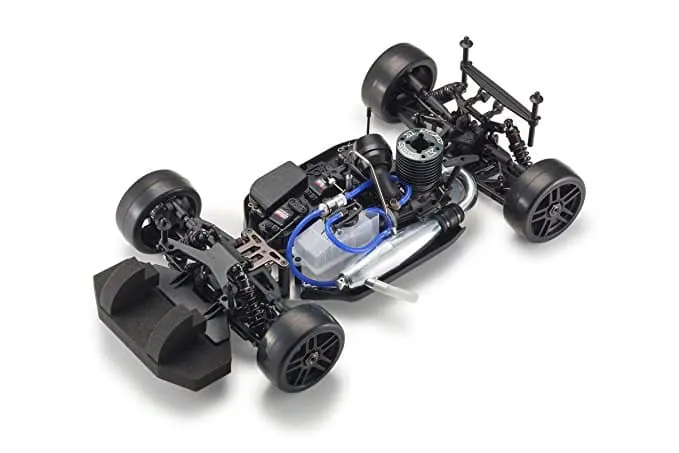
Fuel-powered RC cars are the most “mechanical” side of RC: they have a combustion engine, a fuel tank, an exhaust and a sound no electric car can match. In return, they ask for a bit more commitment than an electric car. In this guide you’ll see what types there are, what you need to start one and how to choose the right one.
Nitro and gas are not the same thing
People often say “gas RC cars” for every fuel-powered model, but there are two very different engine families:
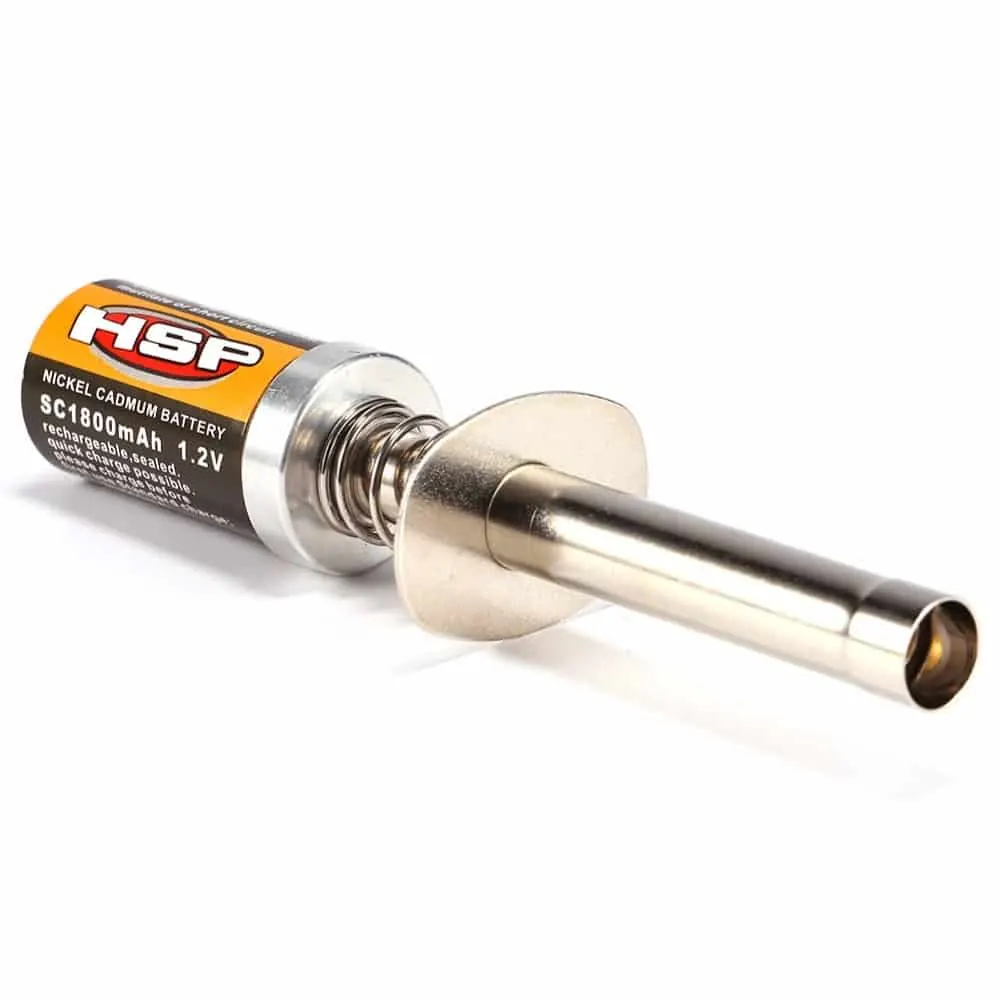
- Nitro (glow) engines. These are the most common in 1/10 and 1/8 scale. They don’t run on gasoline but on nitro fuel made from methanol, nitromethane and oil. They don’t have a spark plug: they use a glow plug that’s heated with a glow plug igniter to start, and then stays hot from the combustion itself. They’re small, rev very high and have a high-pitched sound.
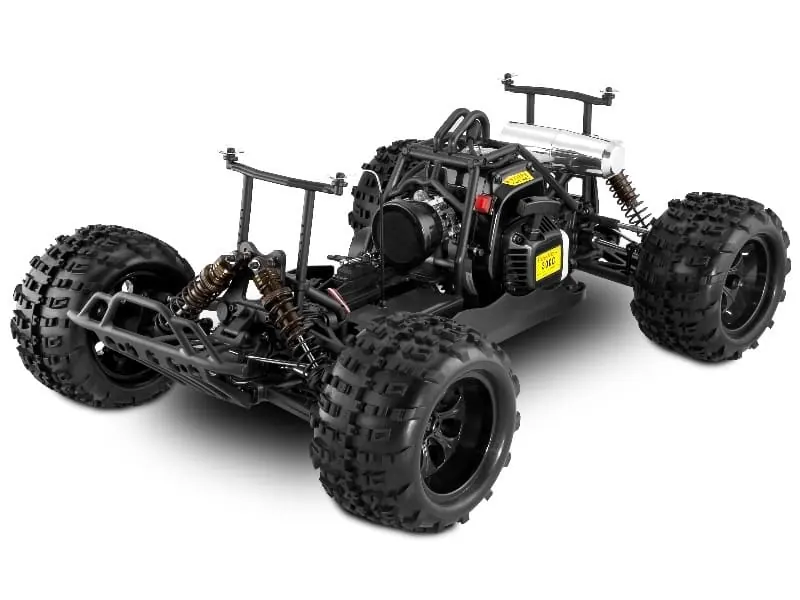
- Two-stroke gasoline engines. These are used mostly in 1/5 scale cars. They run on regular gasoline mixed with two-stroke oil at the ratio the manufacturer specifies, have a spark plug and start with a pull starter, like a string trimmer. The fuel is cheaper and easier to find, but the cars are big, heavy and expensive.
Common scales
- 1/10: on-road cars, buggies and trucks with small nitro engines. They’re the most affordable fuel-powered cars.
- 1/8: the benchmark scale for nitro, especially in racing buggies and truggies. More stable on dirt and with longer run time per tank. See how big a 1/8 scale RC car is.
- 1/5: the home of two-stroke gas. Models like the HPI Baja or the Losi 5IVE-T are big, impressive in person and need lots of room to run.
If you’re not sure about size, the RC car scales guide compares dimensions and uses.
How a fuel-powered RC car is built
Most are 4WD with independent suspension and silicone oil-filled shocks. Besides the engine, they have parts an electric car doesn’t:
- Centrifugal clutch. It connects the engine to the drivetrain only when the revs rise, so the car can sit still at idle.
- Fuel tank, exhaust and air filter. The foam filter is soaked in dedicated filter oil and is the engine’s main defense against dust.
- Carburetor with screws to adjust the high-speed and low-speed mixture and the idle.
- Battery-powered receiver and servos. One servo works the steering and another the throttle and brake, and they run on the receiver’s own battery pack. If it goes flat, you lose control of the car, so always keep it charged.
Make sure the gears and differentials are metal: with the power of a combustion engine, plastic parts wear out quickly.
What you need to start it
A ready-to-run (RTR) nitro usually comes assembled, but it almost never includes everything you need:
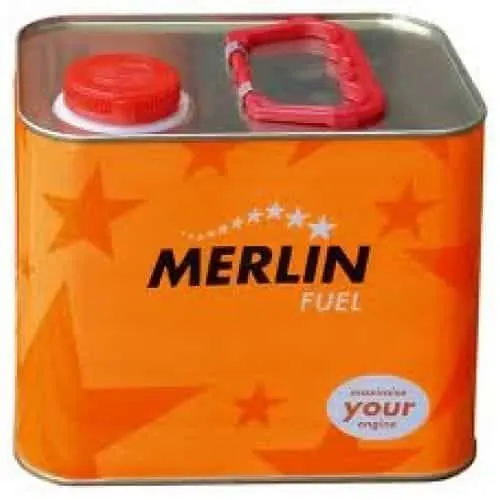
- Nitro fuel in the percentage the engine manufacturer recommends.
- A charged glow plug igniter. If you ever find yourself without one, there are tricks to start a nitro RC car without a glow igniter.
- A fuel bottle to fill the tank without spilling.
- Batteries for the transmitter and the receiver.
- Starting system: a built-in pull starter or an electric starter, depending on the model.
- Basic tools: a glow plug wrench, screwdrivers and hex drivers, threadlocker and filter oil. You’ll find a complete list in RC tools.
Many stores sell all of this together as a nitro RC car starter kit. For fuel, look for nitro fuel for RC cars in the percentage your engine calls for.
Break-in and carburetor tuning
A new nitro engine needs a break-in: the first few tanks are run rich and without pushing it to the max, so the piston and sleeve can seat. After that, you have to tune the carburetor for the day’s temperature and humidity. We explain it step by step in how to tune a nitro RC engine. The basic rule: if the engine gives off very little smoke and runs too hot, the mixture is too lean and you risk damaging it.
Maintenance after every session
Nitro fuel leaves residue and moisture inside the engine. After running it, empty the tank, clean off the dust, check the air filter and put after-run oil in the engine to prevent corrosion. You’ll find the full routine in nitro RC car maintenance. For general chassis cleaning, see how to clean and maintain an RC car.
How to choose your fuel-powered RC car
- Where you’ll drive. For asphalt tracks, a 1/10 touring car or on-road car. For dirt, fields and jumps, a 1/8 buggy or truggy. For mixed terrain and big jumps, a monster truck.
- Nitro or gas. Nitro if you want lighter cars and a racing atmosphere. 1/5 gas if you want a big model and cheaper fuel, and you have the space.
- RTR or kit. An RTR arrives assembled. A kit teaches you the mechanics piece by piece, but it takes time, and depending on the kit you’ll need to buy the engine, electronics or transmitter separately. Compare the pros and cons in RC kit vs RTR.
- Spare parts. Choose brands with parts that are easy to find in the US, such as Traxxas or Kyosho. Fuel-powered models break more parts than electric ones because of their weight and speed.
- Where you can run it. A nitro makes noise and smoke: a track or a club is ideal. Look for RC tracks and clubs near you.
To get an idea of prices, you can compare 1/10 RTR nitro RC cars and 1/8 nitro RC buggies on Amazon.
If you’re still torn between fuel and electric, start with which RC car to buy. For electric cars, the RC electronics section explains batteries, motors and ESCs.
Buying a used nitro or gas RC car
A used nitro can be a good way into fuel-powered RC, but check:
- Engine compression: when you turn it over with the starter, you should feel resistance at the top of the piston’s stroke.
- Play in the bearings, ball joints and drivetrain.
- The condition of the clutch and clutch bell, and of the air filter.
- That the throttle servo always returns to idle and that the brake works.
Also ask how many hours the engine has and what fuel it’s been run on.
If your car has a two-stroke gas engine, work out the oil ratio with the gas oil mix calculator.
Guides on this topic
- Practical Tips on RC Nitro FuelWhy handling your RC nitro fuel correctly matters, along with our best tips.
- How to Start a Nitro RC Car Without a Glow Plug IgniterLearn how to start a nitro RC car without a glow plug igniter and get back to the thrill of speed without the hassle.
- How Does an RC Glow Plug Igniter Work and What Should You Know?A glow plug igniter is one of the most important accessories for running nitro RC cars: it's what lets you start the engine.
- How to Tune a Nitro RC EngineTune your nitro RC engine's carburetor with this step-by-step guide, packed with the best tips and none of the headaches.
- Nitro RC Car Maintenance: Your After-Run RoutineWhat to do after every session with a nitro RC car: empty the tank, clean it, look after the air filter, protect the engine with after-run oil, and check the glow plug, clutch and drivetrain.
Frequently asked questions
Does a nitro RC car run on regular gasoline?
No. Nitro engines run on a dedicated fuel made from methanol, nitromethane and oil. Only the two-stroke engines in 1/5 scale cars run on regular gasoline mixed with oil.
Which is better to start with, a nitro or an electric RC car?
For most beginners an electric car is simpler: charge the battery and go. A nitro needs carburetor tuning, a break-in and engine cleaning, but in return you get the sound, the smoke and the mechanics of a real combustion engine.
What do I need besides the car to start a nitro?
Nitro fuel, a glow plug igniter to heat the glow plug, a fuel bottle, batteries for the receiver and the transmitter and, depending on the model, an electric starter if it doesn't have a pull starter.
Related guides
Free tool
Gas-Oil Mix Calculator for 2-Stroke RC Engines
How much 2-stroke oil to add to the gas for your 1/5 scale RC car, based on the ratio your engine calls for.
Free calculator
RC cars
Which RC Car to Buy: A Guide to Choosing Your First RC Car
Electric or nitro, buggy, monster truck or crawler, scale, RTR or kit, and budget: the questions to ask yourself before you buy an RC car.
3 min read
RC cars
How Big Is a 1/5 Scale RC Car?
Find out how big 1:5 scale RC cars are. Get ready for some big-time fun with these remote-control machines!
3 min read
RC cars
How Big Is a 1/8 Scale RC Car?
Find out the real size of 1/8 scale RC cars and be amazed by their incredible detail. Get ready for some big-time fun!
2 min read