The Complete Guide to Choosing Your First RC Plane
This post introduces you to the world of RC aircraft and explains how an RC plane basically works. Read on!
By Elite Radio Control teamUpdated 12 min read
Part of the guide: RC planes
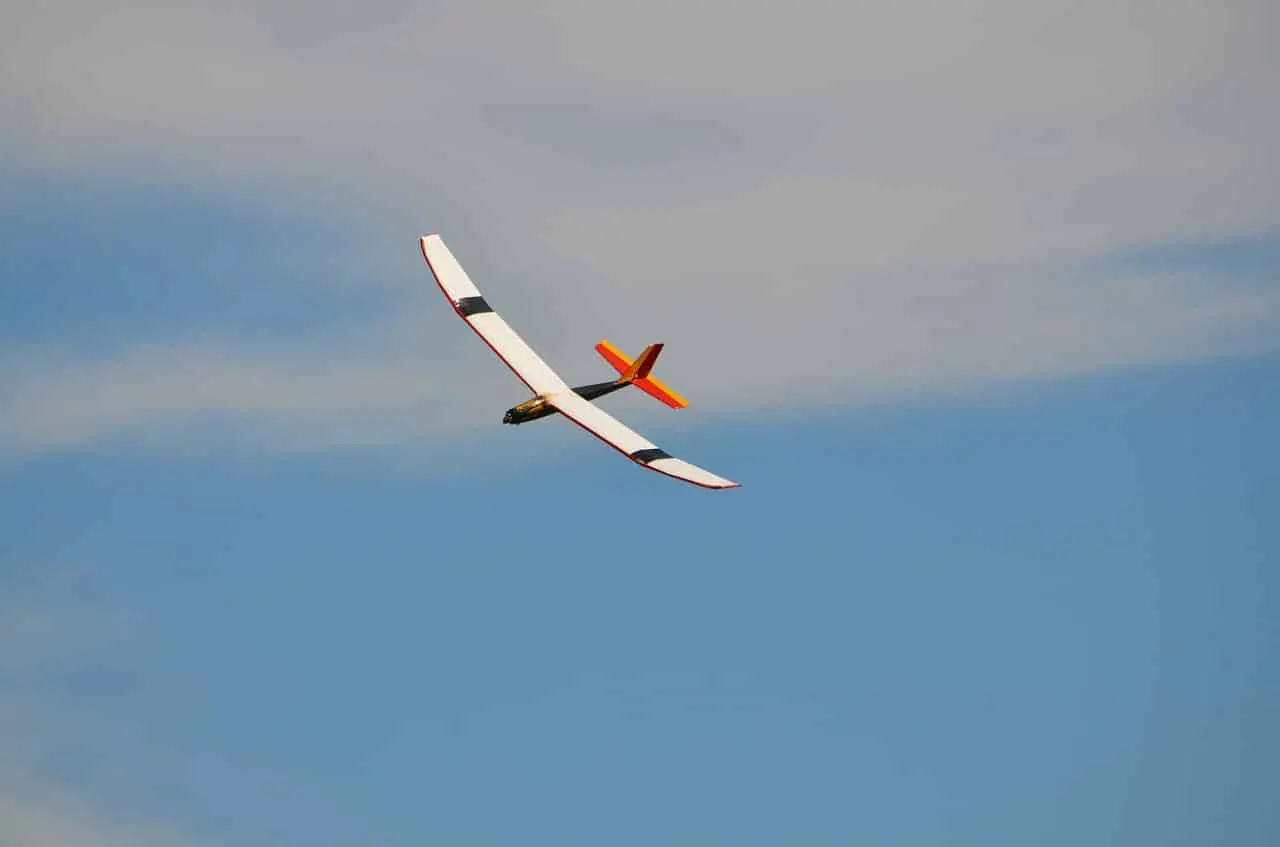
This post introduces you to the world of RC aircraft and explains the basics of how an RC plane works.
The goal is to show you what this hobby involves and help you make the best choice for you.
It’s a relaxing and exciting pastime. I should also warn you that, like any other hobby, it’s addictive.
But don’t worry: everyone crashes their plane at some point. In this guide you’ll find the information you need so that, if it happens, you can repair it easily and fly again.
We’ll go over the models on the market as well as the different power options.
Choosing the power plant
First you need to decide what kind of engine or motor your RC plane will have, so here are the options and the advantages of each.
Electric RC planes
These are usually smaller, quieter RC planes, and they come in a variety of sizes and materials.
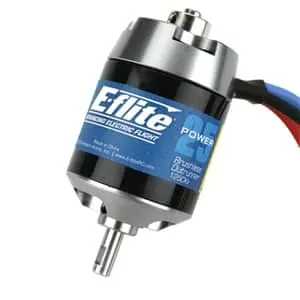
Pros
- Quiet airframe
- Inexpensive
- Clean
- Lots of ready-to-fly models on the market
- Small size, easy to transport
- Smaller flying area
Cons
- Large models are expensive
- The batteries are very finicky (LiPo)
- Foam models are fragile
- Small airframes are less stable in the wind
Weight is critical on an electric RC plane, and the batteries will be the heaviest part of the aircraft.
Anything you can do to save weight will improve flight time and performance.
RC plane batteries
Modern batteries are lithium polymer, or LiPo. They’re very light compared with NiCd and NiMH batteries.
LiPos have one drawback: you have to charge them with a balance charger that brings every cell to the same voltage. You also can’t fully discharge this kind of battery without damaging it.
In a hard crash, you’ll get fireworks, Hollywood style. Even so, they’re the best choice for an aerobatic model plane because of their high current capacity and low weight.
Note:
If you crash a plane with a LiPo battery, remove the battery quickly and leave it on the ground for at least half an hour. DO NOT put it in your car after a crash. You could lose not only the plane but your CAR too.
It’s also recommended to charge LiPo batteries in a LiPo bag. It’s a fireproof bag that keeps anything from catching fire if the battery bursts into flames while charging.
Nitro RC planes
Nitro engines are the “kings” of the RC plane world, burning fuel just like a real airplane. The most common engines are high-revving two-strokes. Others burn the same kind of fuel and are four-strokes.
Pros
- Large-scale airframes
- Longer flight times
- Engines cost about the same as some (LiPo) batteries
- Great sound
- Kits are very cheap
- Extra power means more detail on the airframe, such as retractable landing gear
- Larger airframes handle light wind better
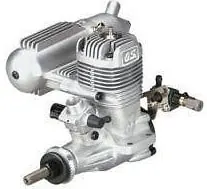
Cons
- Noisy
- Oily
- More engine maintenance
- Some are fast and hard to control
- Need a larger takeoff area
- Take up a lot more room in your car
- More complicated to build
- You need more maintenance equipment
Nitro fuel
Most nitro RC planes use a special fuel you can find at any RC hobby shop. It comes in bottles of roughly 1 quart to 1.3 gallons (1 to 5 liters). It’s a blend of methanol, nitromethane and oil, and the oil lubricates these engines while they run.
The fuel also comes with different nitromethane contents, such as 10% to 35% nitro. As you’ve probably guessed, the more nitro, the more power. Just don’t get carried away: you can destroy an engine with too much nitro.
These are called glow engines because they use a small glow plug to keep the ignition going. You simply use a battery to heat the plug and start the engine.
There are also four-stroke engines that use the same fuel; they have valves like a real car engine.
Their big advantage is more torque for larger propellers and better fuel economy. The downside is the price, and more engine parts to worry about (maintenance, breakage or wear).
Break-in
Most engines also need a break-in when they’re new. If you just take one out of the box and start running it, the parts will overheat and wear out quickly.
Most of the break-in procedure will be in the instructions that come with the engine. It’s a simple process; just make sure you follow the instructions and the engine will last a long time.
Caution! These engines are powerful and dangerous. You can lose a finger or two if you make a mistake. The propellers spin so fast they become invisible, so be careful.
RC gliders
Gliders are a good way to enjoy slow flying.
Pros
- Cheaper than any powered plane of the same size
- Easy to fly
- Most are two-channel (controlling elevator and rudder)
- Large sizes mean long flight times
- Bungee (elastic band) launch
- Quiet, clean flying
Cons
- Limited flight times
- Must land on soft surfaces
- Most have no landing gear
- You may have to chase after it if it runs out of thermals to ride
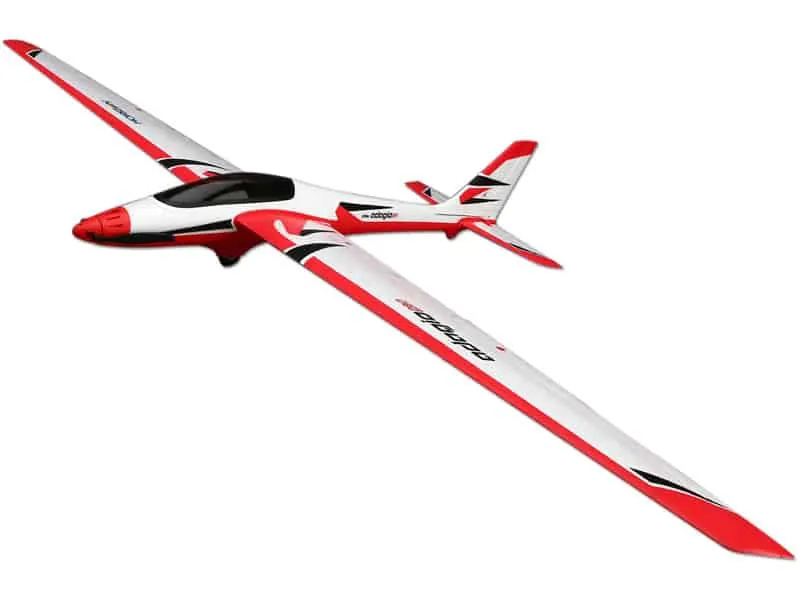
Some gliders can be fitted with an electric motor and a folding propeller to take off and to give you some control when coming in to land. All of these RC planes are very light and have a large wingspan.
These advanced setups allow longer flight times with less power.
Once you’ve chosen the power plant
How good are you with your hands and at building things? This is a hobby, and as such you’ll have to assemble parts before you can fly your creation.
There are many models on the market called “ARF,” or almost-ready-to-fly planes. Most of the main work has been done for you.
Keep in mind that these models are “almost” ready to fly, so you’ll still need a few more hours of assembly.
That’s fine even if you aren’t good at building planes: the very definition of a hobby is building something, and learning everything you need to know about your plane along the way.
Once the build is done, you’ll have the satisfaction of completing a very complicated task, and you’ll be more careful when you fly your plane.
You may not have the time or space for a large model, so I recommend choosing an ARF.
Now let’s talk budget
A trainer with a nitro engine, radio and maintenance gear can be had for under $300. This setup comes with a 4-channel radio, a starter and fuel.
An electric one will be a bit cheaper, around $200–$350 depending on whether you want one or two good batteries. These models have become cheaper in recent years as battery prices have dropped.
If you have a place to fly a nitro RC plane, you don’t have to wait for a battery to charge. A typical engine will use a few quarts (a few liters) of fuel over about 40 flights, for around $15.
On an electric plane of the same size and wingspan, you’ll need a LiPo battery costing at least $120 for roughly 15 minutes of flight; then you have to let it cool down and charge it again before the next flight. So if you want to fly several times a day, you’ll need several batteries.
On the other hand, since your electric RC plane has no combustion engine, it produces no exhaust and isn’t noisy, so it’s a choice you’ll have to make.
RC trainer planes
A good trainer needs stable flight characteristics. It should be predictable and able to fly slowly, for quick takeoffs and slow landings.
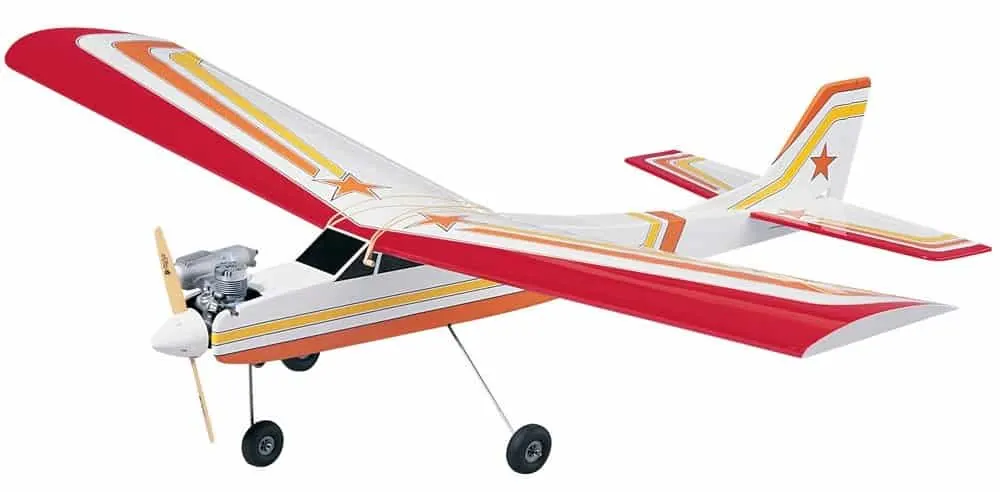
Best of all, and most important, it’s made of Coroplast, a flexible plastic similar to corrugated cardboard, usually called corrugated plastic.
When it crashes, you won’t need many hours of repair to get it flying again, unlike models made of balsa or foam, which crack easily.
A new propeller for these planes starts at about $2.
You’ll also notice in the image below that the wing and main landing gear are held on with rubber bands. This lets these parts pop off in a crash instead of breaking the fuselage. Other planes use plastic bolts instead, which are a good alternative to rubber bands.

Remember, this is a trainer, not an aerobatic plane or a work of art. It’s supposed to fly, not look amazing 😉
Electric setups offer good slow flight; you just need one with the same controls as a larger plane. Many small ARF planes will help you get oriented and practice before taking the step up to a big one.
RC plane simulators
They’re good for practice, and some come included with trainer RC planes. You can also download several online; you just have to look around a bit.
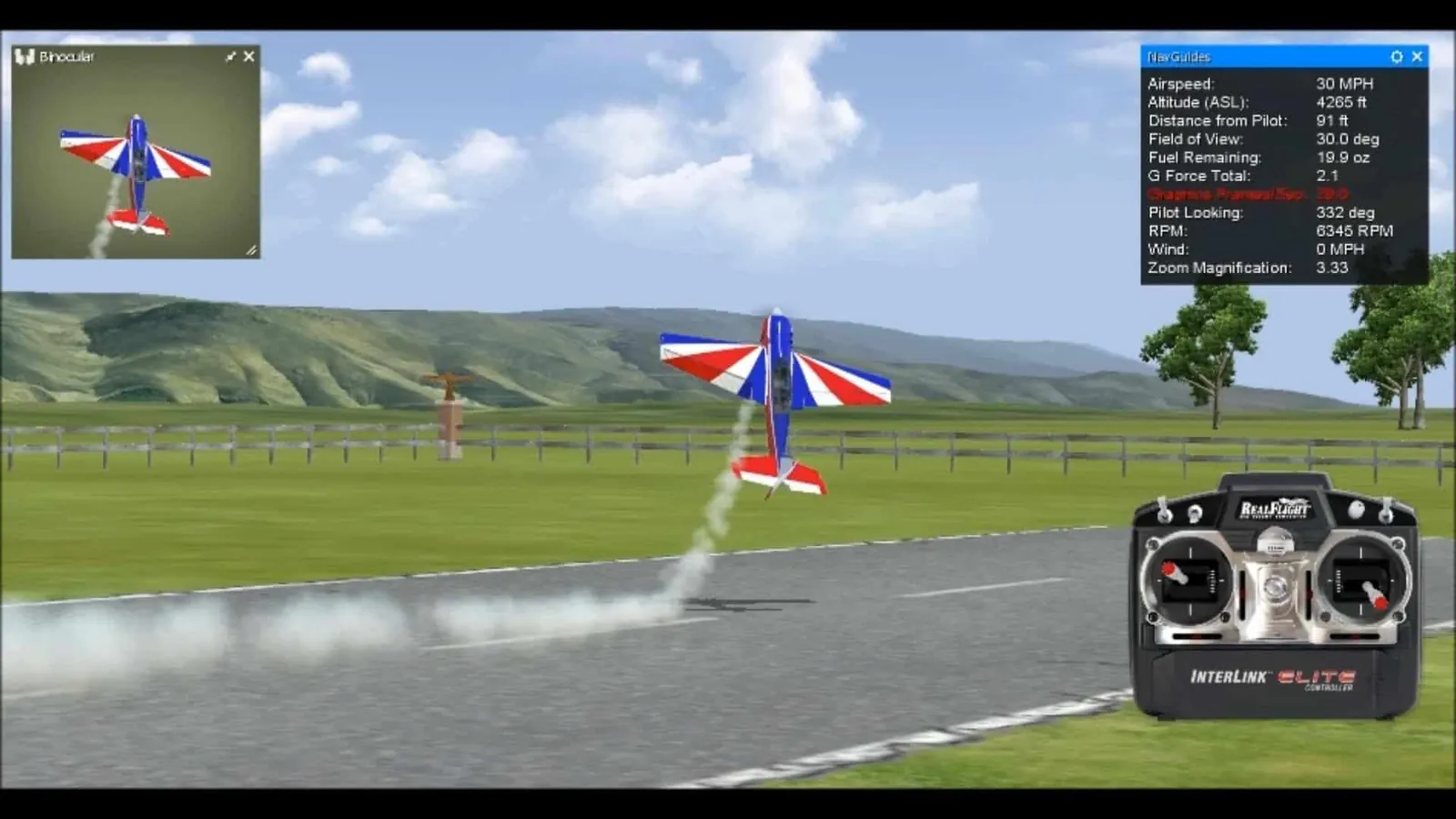
If you want something that looks better, you can try the RealFlight simulator. It will help you get airborne very well. It’s expensive, but it comes with a controller included. Many RC transmitters from Futaba and other brands have a port on the back for a USB cable, so you can use your own RC transmitter with these simulation programs.
I strongly recommend doing this before putting your plane in the air, so you get familiar with the controls you’ll be using.
Get some help
Building and flying your plane can be a challenge. I recommend looking for a local RC club and finding a flying site that’s approved for model aircraft, since this activity isn’t allowed everywhere. In the US, recreational flyers must follow FAA rules, and many clubs and flying fields are affiliated with the Academy of Model Aeronautics (AMA).
Most flying fields have plenty of RC pilots willing to teach you to fly and check your work. It’s always worth letting a second or third pair of eyes look over your work. They can spot a potential problem before takeoff.
You can also learn a lot about model aviation just by watching others.
Building your own model
You can also choose to build your own RC plane, so here’s a short guide.
The RC plane’s fuselage
So if you’ve decided to build your own plane and you plan to build one out of plastic, you’ll be flying in a couple of weekends, because these kits go together quickly with contact cement or super glue.
If you’re going to build a balsa plane (in my opinion they fly better because they’re stiffer and lighter), expect a few weeks of building, but you’ll enjoy working with the wood. They’re super light, and most kits come with good instructions.
You’ll need a large flat surface to work on and something to pin the parts in place and glue them.
Inside the RC plane
Electric models are built the same way as nitro models with a few exceptions: no fuel tank, no throttle servo (replaced by a motor speed controller, or ESC), and a different kind of motor mount.
You can choose a foam plane. They build very quickly, but they’re usually not very big. However, you won’t be able to fly a small one in fairly strong wind or from grass runways.
It’s also worth remembering that electric RC planes are smaller, so if your eyesight isn’t great, one can climb too high and disappear from view from the ground.
You can avoid this by buying a plane as big as you can afford, and by making sure the wings aren’t sky blue.
Installing the antenna in the RC plane
The electronics must be installed very carefully, following the manufacturer’s instructions. Below is a typical diagram of how everything is connected.
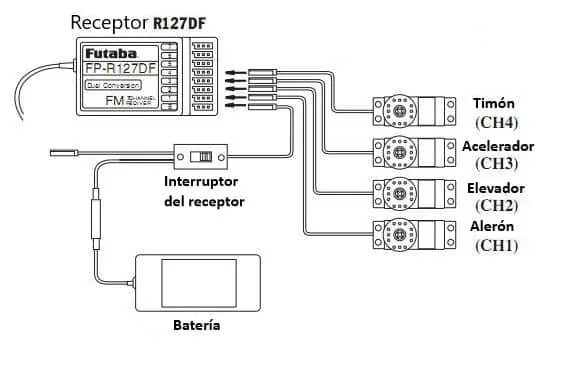
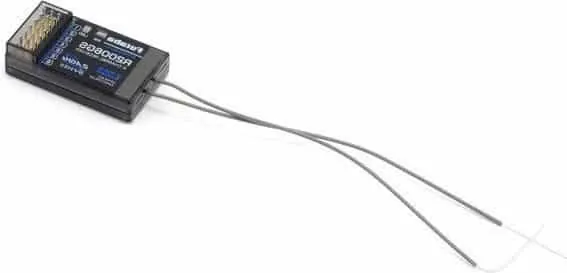
Also, your antenna will just be a wire, and it isn’t very sturdy. Either the receiver and antenna sit inside the aircraft, away from any metal, or, if the plane is small, you can run the antenna outside and tape it along the top.
Most servo kits come with rubber grommets to keep engine vibration from damaging them. Always use them; a stuck servo could ruin your day.
Preflight checks for your RC plane
Always check your plane before every flight, and do a radio range check at least once before each day of flying.
If you use an FM radio with a long antenna, walk at least 30 paces away from the plane and make sure everything works without glitches; if it doesn’t, fix it before flying. Do the test with the engine running and move around the plane to make sure there are no blind spots.
If you’re using a new digital radio, follow the manufacturer’s recommendations.
Most radio failures that have happened come from very long servo leads; you can get a noise filter (suppressor) for this at an RC shop. Make sure you check all your linkages and, once again, have someone look over your shoulder.
Also make sure the fuel lines are in good shape and snug, and on an electric setup, make sure the battery is secured.
Time to fly your RC plane!
Everyone gets nervous the first time they fly a plane they spent a long time building. I can’t stress enough that if you build a tough plane, crashes and scrapes won’t be so bad.
For takeoff, slowly push the throttle all the way up and let the plane roll out gradually until it lifts off. Once in the air, it’s best to start with gentle turns.
On your first flight, don’t try anything aerobatic. Just climb to a good altitude and fly slow circles while holding altitude.
You should also fly a few practice approaches to get ready for landing.
Caution!
Keep track of how long you’ve been flying. Nitro planes can fly for up to 20 minutes, depending on how much fuel you carry.
I recommend trying your first landing before the fuel runs out, in case you need to go around and try again.
More realistic RC plane models
After several flights without incident, taking off, climbing to a good altitude and flying a few circuits, you’ll surely want to start looking at faster, more maneuverable planes. One example is big jet planes, great for flying like crazy, with a powerful engine and plenty of speed.
Scale planes
Scale aircraft take longer to build and can cost more than a simple trainer, but they’re the planes that come closest to the real thing.
You can spend months building a kit if you want one with a high level of detail.
Most scale planes are heavy, so you’ll need a lot of power for takeoff, and they aren’t recommended for a beginner pilot.
Conversions
A conversion is a plane that started out as an electric RC plane and now runs on fuel, or vice versa.
Today, thanks to huge advances in batteries and electric motors, many nitro RC planes will fly well on electric power. The batteries do carry a risk of fire, though, so take the necessary precautions.
Final thoughts on RC planes
Building and flying scale planes is a challenging hobby. You’ll almost certainly enjoy it a great deal, although it isn’t for everyone. If you can’t take the time to build things properly, you won’t have a good time, and you’ll have plenty of headaches.
I’d also recommend sizing your RC plane to your home and your car. If it’s a hassle to move, you won’t fly much and your money will go to waste.
Thanks for stopping by this post. See you in the next one.
Related guides
RC aircraft
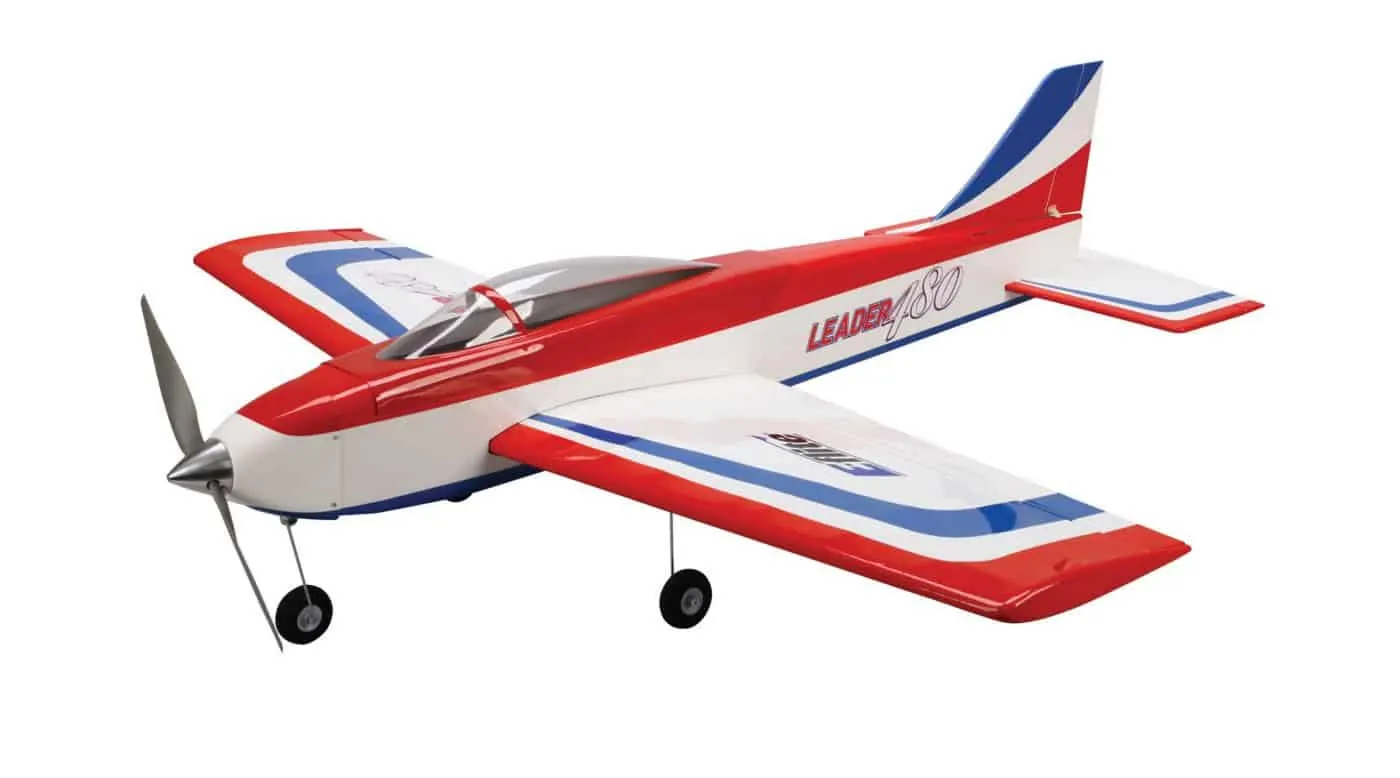
Electric RC Planes: The Most Popular of the Family
Choosing the right electric RC plane can feel overwhelming, so we put together this guide to make the job easier.
4 min read
RC aircraft
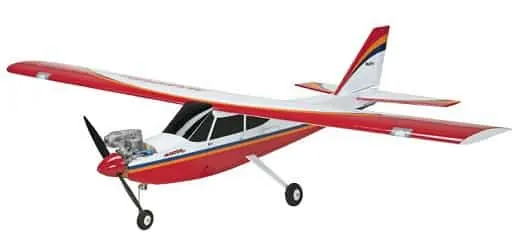
Gas RC Planes for Engine Lovers
We explain how a gas RC plane works, which one to choose and how to start flying one.
3 min read
RC aircraft
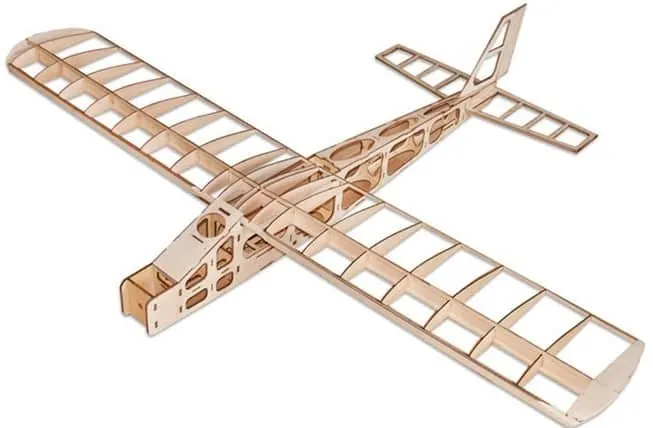
How to Build Your Own Homemade RC Plane
Find out how to build your own homemade RC plane and have a blast flying it. You don't need to be an expert to enjoy model aviation.
5 min read
RC aircraft
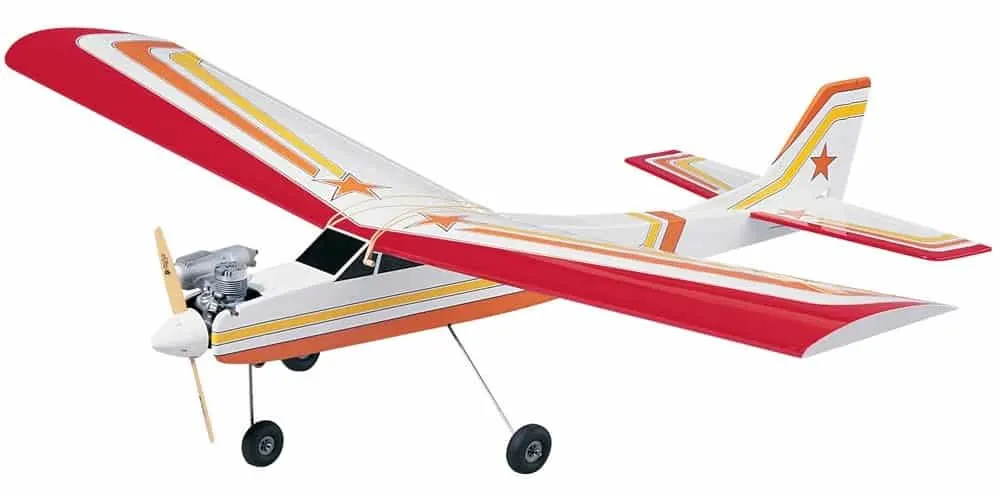
The RC Trainer Plane: Perfect for Getting Started in the Hobby
Fly high with an RC trainer plane! Perfect for beginners who want to learn how to fly. Take off in style!
3 min read