How to Charge an RC Battery Without a Charger: What Works and What Doesn't
Lost your charger? Why you can't just wire an RC battery to a USB port or another battery, and the safe alternatives that actually get you running again.
By Elite Radio Control teamUpdated 5 min read
Part of the guide: RC electronics: batteries, motors and ESCs
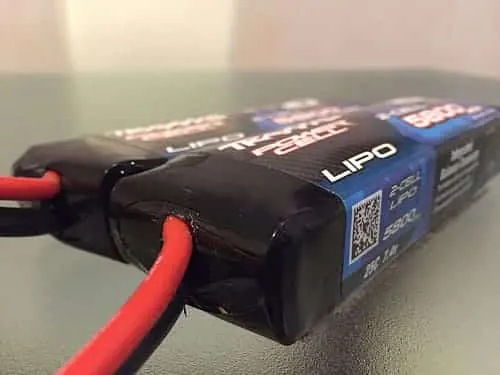
If you’ve lost your charger or left it at home, here’s the short answer: you can’t safely charge a LiPo or NiMH pack without a charger. What you can do is find something else that works as a proper charger, and there are a few easy ways to do that. Below you’ll find why improvising is a bad idea, which alternatives work and how to tell what battery you have. For the rest of your car’s electronics, see the RC electronics guide.
Why you can’t charge an RC battery without a charger
A charger isn’t just a power source. It controls how much current goes in, up to what voltage, and when to stop.
- LiPo and Li-ion: they charge at constant current first, then at constant voltage, up to about 4.2 V per cell (4.35 V for LiHV). Push past that and the cell degrades, swells and can catch fire. In a multi-cell pack, each cell also has to be watched individually; that’s what balance charging does.
- NiMH: the charger knows the pack is full by a small voltage drop and a rise in temperature at the end of the charge. Without that detection, the pack keeps heating up and gets damaged.
A source that knows none of this (a USB port, power bank, solar panel, car battery, or a bench power supply without charge control) just keeps pushing current until something gives. That’s why the alligator-clip and bare-wire “hacks” floating around online are a bad idea.
Safe ways to charge an RC battery without your charger
What you need isn’t a way around the charger, but another charger that suits your battery. These are the most practical options:
1. The car’s own USB charging cable
Many toy-grade and entry-level RC cars come with a USB charging cable that has a small module in it (often with an LED that changes color) containing the charging circuit. That cable can go into a phone charger, a laptop or a power bank, because the module controls the charge, not the USB port. Only use it with the battery it was made for. Some power banks shut off on their own when the current draw is low; if charging keeps stopping, try a wall charger instead.
2. A 12 V hobby charger at the track
Many hobby chargers run on DC input of 12 V or a bit more (check the range in the manual). You can hook them up to your car’s battery or a 12 V battery with the clips on their input lead, minding the polarity. Here the clips go to the charger, not to your RC pack, and the charger manages the charge. Just don’t run your car battery flat.
3. Borrow a charger
At a club, track or hobby shop, someone almost always has a balance charger. Make sure it supports your battery type and cell count, and that you have the right connector or an adapter.
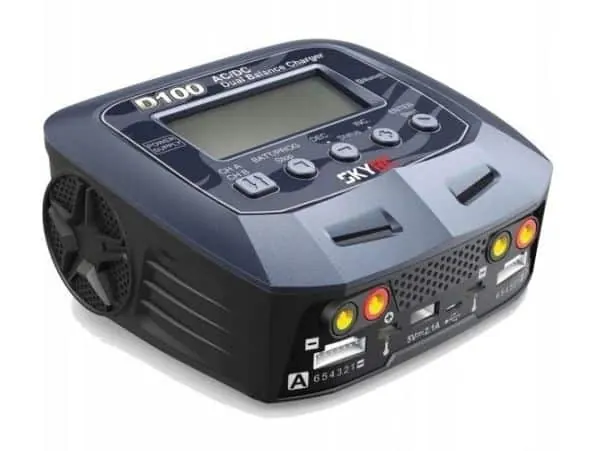
4. Buy a basic balance charger
Available on Amazon
If your car runs on LiPo, a basic LiPo balance charger doesn’t cost much, and most of them also have a NiMH mode. Before you buy, read the guide on how to choose a LiPo charger, which covers how much power and which features you need.
- LiPo balance chargerCheck price
What you should never do
- Wire the battery leads straight to a USB port on a laptop or phone charger.
- Connect it to a power bank or solar panel without a charger in between.
- Clip it to a car battery or another battery.
- Use a bench power supply without charge control as if it were a charger.
- Charge a LiPo on a NiMH charger or in any mode other than its own.
- Warm the pack with heating pads, blankets or hair dryers to “help” the charge.
How to tell which battery your RC car has
Before you go looking for a charger, identify the battery:
| What to check | LiPo | Li-ion | NiMH |
|---|---|---|---|
| Label | “LiPo”, “Li-Po”, “2S 7.4V” | “Li-ion”, sometimes visible 18650 cylindrical cells | “Ni-MH”, “6-cell 7.2V” |
| Voltage per cell | 3.7 V nominal | 3.6–3.7 V nominal | 1.2 V nominal |
| Balance lead | Yes, if it has 2 or more cells | Sometimes | No |
| Shape | Flat or rectangular pack, often in a hard case | Cylindrical cells in a pack | Several cylindrical cells in a row |
The connector is another clue: toy-grade cars usually have small JST or SM-style plugs, while hobby-grade cars use connectors such as Deans (T-plug), XT60, EC5 or Traxxas’s own. If it’s a LiPo, the RC LiPo battery guide explains cell count (S), mAh and C ratings.
Check the charge with a multimeter
A multimeter won’t charge anything, but it tells you where the battery stands. On a LiPo, each cell is full at about 4.2 V, at storage level around 3.8 V, and shouldn’t be run below about 3.0–3.2 V. Multiply by the cell count: a full 2S pack reads about 8.4 V. You can get the numbers for any pack with the LiPo voltage calculator. On NiMH, resting voltage says little about how much charge is left, so trust the charger instead.
If a LiPo reads well below those values, the charger may refuse to charge it. Don’t try to “wake it up” with another power source: the pack is damaged and the safest move is to retire it.
Charging safety basics
- Always charge in the right mode (LiPo, Li-ion, NiMH) and with the right cell count.
- For LiPo, plug in the balance lead and charge at 1C unless the manufacturer allows more. The guide on how to charge an RC car battery walks through it step by step.
- Never leave a battery charging unattended, and charge on a non-flammable surface or inside a LiPo safe bag.
- LiPo safe bagCheck price
- Let the battery cool down after a run before you charge it.
- A swollen, dented or damaged pack doesn’t get charged: retire it and take it to a battery recycling drop-off or a hobby shop that accepts old packs.
Frequently asked questions
Can I charge my RC car battery from a USB port?
Only with the USB charging cable that came with the car, because that cable has its own charging circuit for that battery. Wiring the battery leads straight to a USB port, power bank or solar panel is dangerous and can ruin the pack or start a fire.
Can I charge a LiPo with a NiMH charger?
No. NiMH chargers decide when to stop in a different way and can overcharge a LiPo. Always charge a LiPo on a compatible charger, in LiPo mode, with the balance lead plugged in.
How do I charge at the track if there's no outlet?
Use a hobby charger that accepts 12 V DC input and power it from your car's battery or a 12 V battery. The hobby charger controls the charge, not the car battery.
Related guides
RC cars
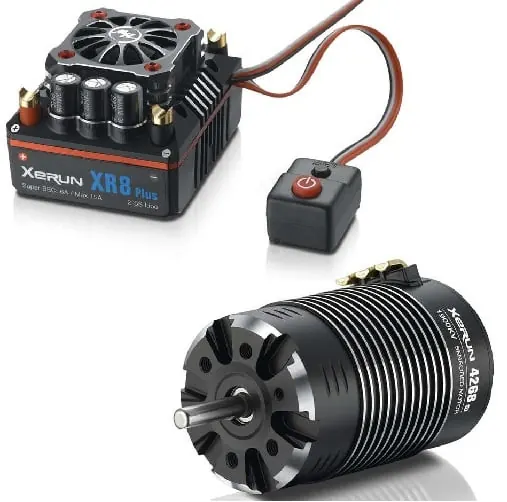
Brushless vs Brushed Electric RC Motors: Which Is Better?
Learn the difference between brushless and brushed electric motors in RC cars. Don't miss this complete guide!
5 min read
RC cars
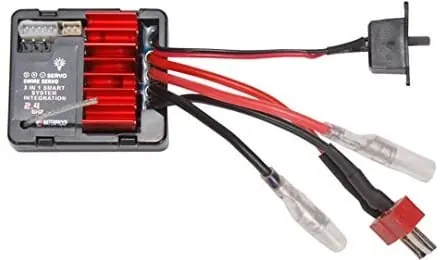
What Is an ESC: How It Works, How to Choose One and How to Install It
The ESC controls how much power reaches your RC car's motor. What it does, which specs to look at, what size you need and how to mount and connect it.
4 min read
RC cars
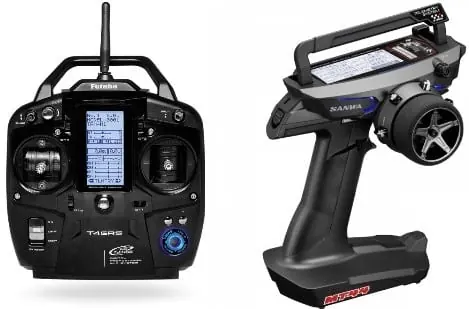
8 Tips for Choosing Your RC Transmitter
Find the best transmitters for RC cars in this post, and run your races like a real pro!
5 min read
RC cars
How to Choose a LiPo Charger: Cell Count, Power and the Features That Matter
Cell count, wattage, balance charging, AC or DC input, storage mode and connectors: what to look for so you choose a LiPo charger that fits your batteries.
6 min read