Tamiya Cement for Scale Models and RC Cars
Here you'll learn all about Tamiya cement, not just for plastic model kits but also for RC cars and planes.
By Elite Radio Control teamUpdated 6 min read
Part of the guide: RC workshop: building, maintenance and painting
If you’re just getting started in scale modeling, you’ve probably noticed how many things you need to keep in mind when you build a model. In this post we’ll go over the different types of glue out there, with a special focus on Tamiya cement.
Remember that each of these glues is made for a different type of material and for different situations, so be sure to read through this post before you buy a new glue for your scale models.
Types of glue for scale modeling
As we mentioned, when you’re new to the hobby, the sheer number of things to keep track of can feel a little overwhelming. That’s why we’ll give you more detail on how to choose the perfect Tamiya cement for each job.
It’s common to see all-purpose glue on models built by beginners, since it’s usually the first glue they have on hand. But these glues aren’t the best choice for your model, and to get better results you need to know which glue works best for each type of material.
Tamiya green-cap cement
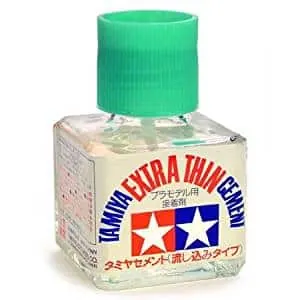
Tamiya without a doubt offers one of the best glues you can find on the market right now. It comes in a small, square glass bottle with a green cap on top. The cap has a small brush built in, which you use to glue different kinds of plastic very neatly.
You can use this cement to join plastic or polystyrene parts on your model, the materials most scale models are made of. Another feature of Tamiya’s green-cap cement is its capillary action, which helps deal with the cracks and gaps that can form on a model’s surface.
Because it’s so thin, it flows into small cracks and gaps in the surface when you apply it with the brush in the cap. This helps reinforce the joints between the parts of your model.
Precautions with Tamiya Extra Thin Cement
A small amount of this Tamiya cement creates a strong bond, so use it sparingly. This adhesive contains very powerful chemicals and has a very thin consistency, but it’s also very precise and dries in a matter of minutes.
Be careful with the toxic fumes this adhesive can give off, so always use it in a well-ventilated area. Keep it away from children, and avoid contact with your eyes and skin.
Tamiya CA cement kit
This type of cement gives a fast bond on metal, synthetic rubber and hard plastic. It’s handy for assembling small parts that need to set quickly. Its low viscosity lets the glue spread into the gaps.
The dropper-style applicator helps you use it efficiently, one drop at a time. You’ll only have a few seconds to position the part you’re working on.
The applicator tube has a screw-on cap that keeps the glue from leaking once you’ve opened it.
Remember that this glue is also fairly toxic, so use it in a ventilated space to avoid breathing it in while you work.
Tamiya cement buying guide
First consider what material you plan to glue, how much working time you need, how long it takes to cure completely and what type of surface you’re working with. If you weigh these factors carefully, you’ll end up choosing the right glue, one that makes your scale models durable and sturdy.
Here are a few points to keep in mind when choosing the right glue.
Materials to glue
This is an important factor, since it will probably decide which Tamiya cement you choose. Different adhesives bond differently depending on the material, so keep this in mind before you buy any glue. For example, Tamiya CA Cement can be quite versatile. It’s ideal when you’re trying to join plastic to plastic or plastic to other materials.
However, other glues are better suited to specific materials, such as Tamiya Extra Thin Cement. They work by melting the plastic surfaces when you apply them and then fusing the two plastics together to create a relatively strong bond.
Glue viscosity for model building
Glues come in different viscosities: medium, thin or thick. Thick glues usually come in metal tubes and tend to have a lot of body. They also have a big advantage in how long they take to dry, which gives you plenty of time to position the parts just right before they fully harden.
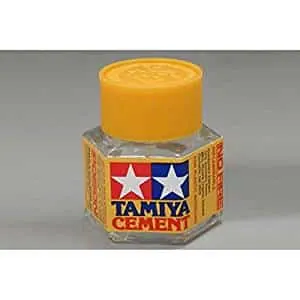
Medium-viscosity glues tend to come in plastic bottles with a thin applicator for laying down the glue. They dry faster than thick glues.
Ultra-thin glues often come in bottles with brush applicators built into the cap. You can also use a detail brush to apply the glue. They usually dry very quickly, so they give you little time to adjust the parts you’re joining, but they cause little or no damage to the surfaces if you need to reposition them.
Time to cure completely
This is how long it takes for the joined parts to dry completely and for the bond to be strong enough. The time varies depending on the Tamiya cement you use. For example, some take about 5 minutes, while others take up to a day before they’re fully cured.
However much time you have, it’s vital to give plastic cement enough time to dry completely. That’s what lets it form strong, long-lasting joints.
Cost of Tamiya cement
Tamiya cements generally aren’t expensive. However, if you’re buying in bulk for large-scale use, the costs can add up. So consider the total cost of buying a particular type of glue and whether it fits your budget.
There may be cheaper alternatives if you can’t get the original glue you want, and the same goes if you’re looking for good value even when buying in small quantities.
Tamiya cement for polystyrene
Tamiya polystyrene cement is one of the glues you’ll use most when building models. It’s made for joining polystyrene parts, one of the most widely used materials in scale models.
This cement reacts with polystyrene by melting it, so the joints you get are very solid and long-lasting. Because of that, you also need to keep an eye on this melting effect: if you make the mistake of using too much glue, it will “eat” the plastic and can ruin part of your model or some of its parts. You’d then have to make repairs that are much harder to do.
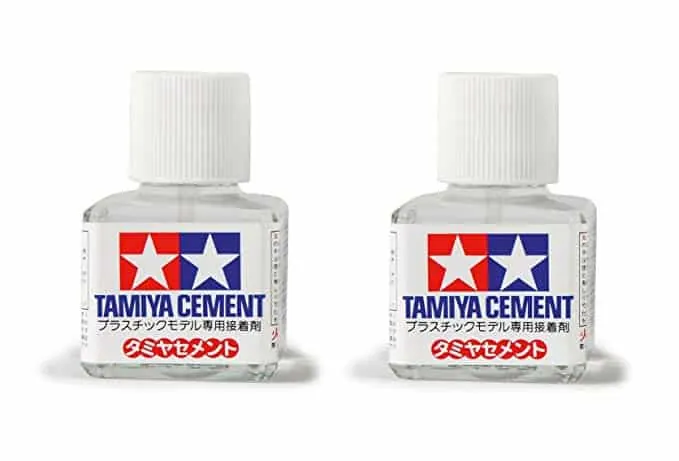
Many companies today make specific glues for their own models, so it won’t be hard to find the right one for yours. They’re easy to find at hobby shops and at big stores near you.
Precautions with polystyrene cement
As we explained in the previous section, you need to take some precautions with this type of glue because of the way it welds the plastic.
Another thing to keep in mind with this type of glue is that it tends to attack paint, so don’t use it on parts that have already been painted, because it will dissolve the paint.
Keep in mind too that this so-called polystyrene cement only works on rigid polystyrene, not on expanded polystyrene (foam such as Styrofoam), which it will simply dissolve. Bear this in mind if you’re working with those materials.
Keep this glue away from flames and heat sources, since it’s highly flammable. The fumes it gives off can be highly toxic, so remember to work in a well-ventilated area.
Because of those fumes, you also can’t use this glue on clear parts, since the vapors will leave marks and smudges on them.
Buying Tamiya cement
If you want to buy Tamiya cement, you can find it on Amazon.
There it’s easy to choose the payment method that suits you best and pick your shipping method. Remember that you can also take advantage of the perks Amazon offers, especially when it comes to shipping.
We chose this platform so we can point you to top-quality products and a place where you can shop quickly and easily.
Thanks for visiting this post. We hope you enjoyed reading it. Remember that you can leave your comments below and share it on social media.
Related guides
RC cars
How to Build an RC Car: What You Need, Step by Step
Kit or scratch build, components, tools, cost and the steps to build your own RC car and get it ready to drive.
4 min read
RC cars
Tamiya Paint: Amazing Colors for Your RC Models
Find Tamiya paint for scale modeling and RC here, plus the different types you can choose from and how to use each one.
4 min read
RC cars
How to Build a Cardboard RC Car
Find out how to build your own cardboard RC car in this fun post from our blog. Don't miss it!
5 min read
RC cars
Tamiya RC Models: Japanese Engineering
Get all the details on Tamiya, the Japanese brand that has specialized in high-quality scale models for decades.
4 min read