How to Fix an RC Car ESC: Symptoms, Checks and Fixes
Beeping, stuttering, cutting out or no response at all: a step-by-step guide to troubleshooting your RC car's ESC, what you can fix at home and when to replace it.
By Elite Radio Control teamUpdated 6 min read
Part of the guide: RC electronics: batteries, motors and ESCs
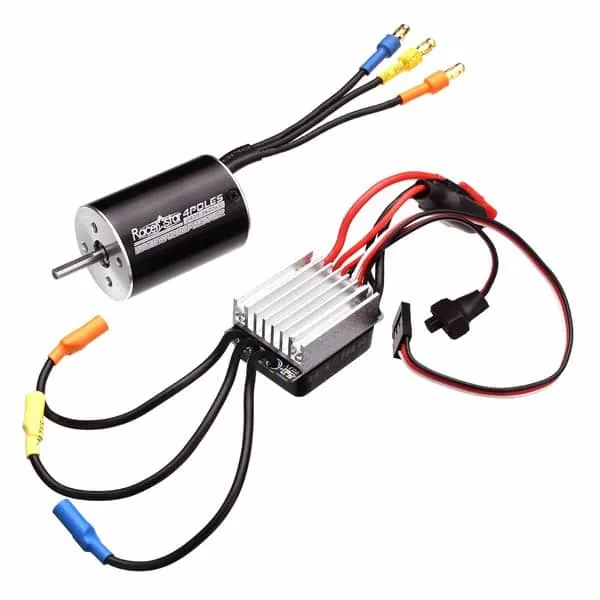
The ESC (electronic speed controller) takes the throttle signal from your receiver and controls how much power flows from the battery to the motor: it handles acceleration, braking and, on many cars, reverse. For a refresher on how it works before you start hunting for the fault, read what is an ESC; for the rest of the system, see our guide to RC electronics.
This guide goes from the simplest checks to the hardest. Most “dead ESCs” turn out to be a battery, a connector or a calibration problem.
Before you start: unplug the battery any time you work on wires or connectors, and when you test with the battery in, put the chassis on a stand with the wheels off the ground.
Common symptoms and what they usually mean
| Symptom | Most likely causes |
|---|---|
| No response, no lights, no beeps | Dead or badly connected battery, ESC switch, switch wire |
| Beeps but won’t move | No receiver signal, uncalibrated throttle, wrong battery type or LVC setting |
| Stutters or cogs on takeoff | Loose or damaged sensor cable, loose motor wire or bullet, burnt motor phase |
| Runs, then cuts out after a few minutes | Thermal protection, low-voltage cutoff (LVC) |
| Runs backward | Motor wires swapped or motor direction setting |
| Glitching or random dropouts | Antenna, loose receiver, servo overloading the BEC |
Beep and LED patterns are specific to each manufacturer. Count the beeps and note the rhythm, then check them against the table in the manual.
Step-by-step checks (in order)
1. Charged battery, connected the right way
Check the battery with a voltage checker or multimeter. A flat LiPo, or one with a weak cell, can keep the ESC from arming or drop it straight into cutoff. Check polarity too: red to red, black to black. Plugging a battery in backward can kill an ESC instantly, and many have no protection against it. If you’re not sure about the pack, our RC LiPo batteries guide explains how to check it, and the LiPo voltage calculator shows what voltage to expect per cell.
2. Switch and connectors
The ESC switch is a weak spot: dust, water or a pinched wire can kill the contact. Wiggle the switch wire with the ESC on and see if it shuts off. Make sure the connectors (XT60, Deans/T-plug, EC3, Traxxas and so on) aren’t loose, worn or scorched.
3. Binding and receiver channel
The ESC lead usually plugs into channel 2 (throttle) on the receiver, with the signal wire in the right position. If the receiver light is blinking or off, it isn’t bound: Always turn the transmitter on first, then the car.
4. Throttle calibration
If the ESC doesn’t know where your transmitter’s neutral, full throttle and full brake are, it may not arm, may lack power or may only give partial brakes. Recalibrate after changing transmitters or receivers, or after touching the trim. The general procedure is:
- Set the throttle trim to zero and throttle and brake travel (EPA/ATV) to 100% on the transmitter.
- With the ESC off, turn on the transmitter.
- Power the ESC up in calibration mode (depending on the brand, by holding the set button or holding the trigger in a specific position).
- When the beeps or LED prompt you, leave the trigger at neutral, then go to full throttle, then full brake, confirming each point.
The exact order and timing vary by manufacturer, so follow your ESC manual. Other settings (battery type, brake, punch, reverse) are covered in our guide on how to program an RC ESC.
5. Motor wires and sensor cable
Check the bullets or terminals on the motor wires: a loose bullet or cracked solder joint causes stuttering and heat. On a sensored brushless motor, the flat sensor cable has to be fully seated in the motor and the ESC; if it’s pinched or loose, the car will cog on takeoff. If in doubt, try a different sensor cable.
6. Overheating and gearing
If the car runs a few minutes, cuts out and then works again after a short while, the thermal protection has most likely kicked in. Carefully touch the motor and ESC: if they’re too hot to hold a finger on, something is working them too hard. Typical causes are a pinion that’s too big, a motor with too much kV for the car, a binding drivetrain or bearings, poor airflow or a dead fan. Check your RC gear ratio: going down a few teeth on the pinion often fixes it.
7. Low-voltage cutoff (LVC) with LiPo
If the car loses power or stops after the battery has been running for a while, the LVC may simply be doing its job. With LiPo packs it must be on, with the cell count correctly detected or set. Never turn it off to squeeze out extra run time: over-discharging a LiPo damages it and can make it puff. If cutoff hits early on a charged pack, make sure the ESC isn’t set for more cells than the battery has.
8. Water and dirt
“Waterproof” or “water-resistant” doesn’t mean submersible. If the ESC got wet, unplug the battery right away, dry it, blow water out of the switch and connectors and let everything dry completely before testing. If it works intermittently or runs hot afterward, moisture may have damaged a component.
Motor runs the wrong direction
- Brushed motor: swap the two motor wires.
- Sensorless brushless: swap any two of the three wires.
- Sensored brushless: don’t swap the wires, because A-B-C must match the sensor. Use the ESC’s motor rotation setting if it has one.
If you reverse the throttle channel on the transmitter instead, recalibrate the throttle.
Glitching and random dropouts
If the car glitches, check the receiver antenna (no cuts, routed away from power wires and the motor) and make sure the receiver is mounted securely. A strong steering servo can draw more current than the ESC’s BEC supplies: voltage sags, the receiver reboots and it looks like the ESC failed. An external BEC or an ESC with a stronger BEC usually helps.
What you can fix at home
- Connectors: replace them with new ones of the same type, with good solder and heat-shrink.
- Solder joints: redo a cold or cracked joint on the battery or motor wires, with a soldering iron that has enough power. See our RC tools guide for the gear.
- Fan: replace it with one of the same size and voltage if it doesn’t spin.
- Recalibrate and reprogram: often a factory reset plus a fresh calibration is all it takes.
When to replace the ESC
Available on Amazon
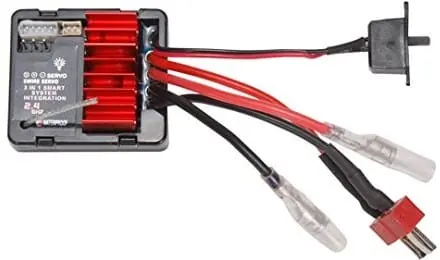
Replace the ESC if it smells burnt or has smoked, if you see blackened or cracked components (the power MOSFETs), if the capacitor is swollen or leaking, or if it still stutters with a motor and wires you know are good. Board-level repair takes experience, and opening the ESC usually voids the warranty. If you need a replacement, compare brushless RC car ESCs that match your scale, battery and motor.
- Brushless RC car ESCsCheck price
Brushed vs brushless ESC notes
A brushed ESC drives two wires and won’t run a brushless motor; a brushless ESC drives three phases, and most won’t run a brushed motor unless they have a dedicated brushed mode. Switching from one type to the other means changing the combo. The full breakdown is in our brushless vs brushed RC motor guide.
Frequently asked questions
Why does my ESC beep but the car won't move?
The beeps are usually codes: low or misdetected battery, no signal from the receiver, uncalibrated throttle or thermal protection. What each pattern means depends on the brand, so match it against the table in your ESC manual.
How do I calibrate my ESC's throttle?
In general you center the throttle trim, power the ESC up in calibration mode and teach it neutral, full throttle and full brake, confirming each point by its beeps or LED. The exact order varies by manufacturer, so follow your ESC manual.
When should I replace the ESC instead of fixing it?
If it smells burnt, has smoked, has blackened parts or a swollen capacitor, or it still stutters with a motor you know is good, replacement is the sensible call. Opening the ESC usually voids the warranty.
Related guides
RC cars
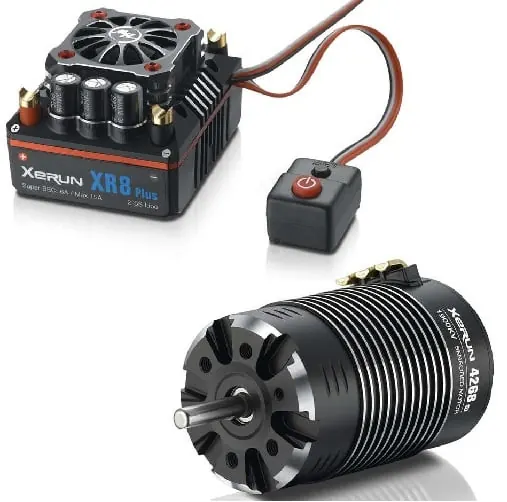
Brushless vs Brushed Electric RC Motors: Which Is Better?
Learn the difference between brushless and brushed electric motors in RC cars. Don't miss this complete guide!
5 min read
RC cars
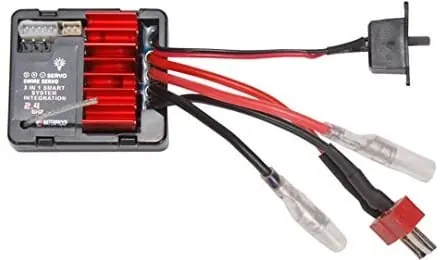
What Is an ESC: How It Works, How to Choose One and How to Install It
The ESC controls how much power reaches your RC car's motor. What it does, which specs to look at, what size you need and how to mount and connect it.
4 min read
RC cars
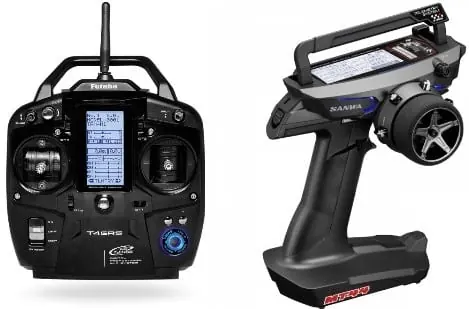
8 Tips for Choosing Your RC Transmitter
Find the best transmitters for RC cars in this post, and run your races like a real pro!
5 min read
RC cars
How to Program the ESC in an RC Car
Learn to program your RC car's ESC like a pro and own the track with these simple steps.
5 min read